


How do bonded solid tires completely eliminate the risk of tire blowouts and ensure port operation safety?
Release Time : 2025-12-01
In busy ports, yards, and logistics hubs, tire-mounted gantry cranes undertake the task of handling heavy containers day after day. Their operating environment is complex and harsh—the ground is covered with gravel, metal scraps, sharp bolts, and even high-temperature welding slag. Traditional pneumatic tires are highly susceptible to punctures, cuts, or structural fatigue under such conditions. Once a tire blowout occurs, it not only causes sudden equipment shutdown and operational interruption but can also lead to crane imbalance, cargo overturning, and even personal injury. Therefore, more and more port operators are turning to a solution that fundamentally eliminates such risks: bonded solid tires. They don't rely on "luck" to avoid danger but instead use a completely solid structure to eliminate the risk of tire blowouts at the source.
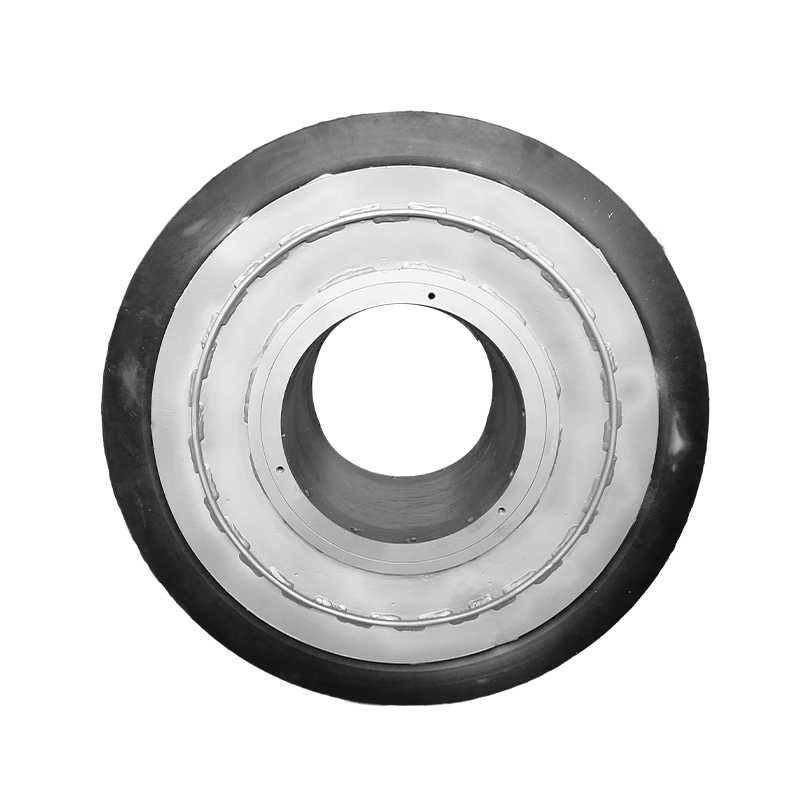
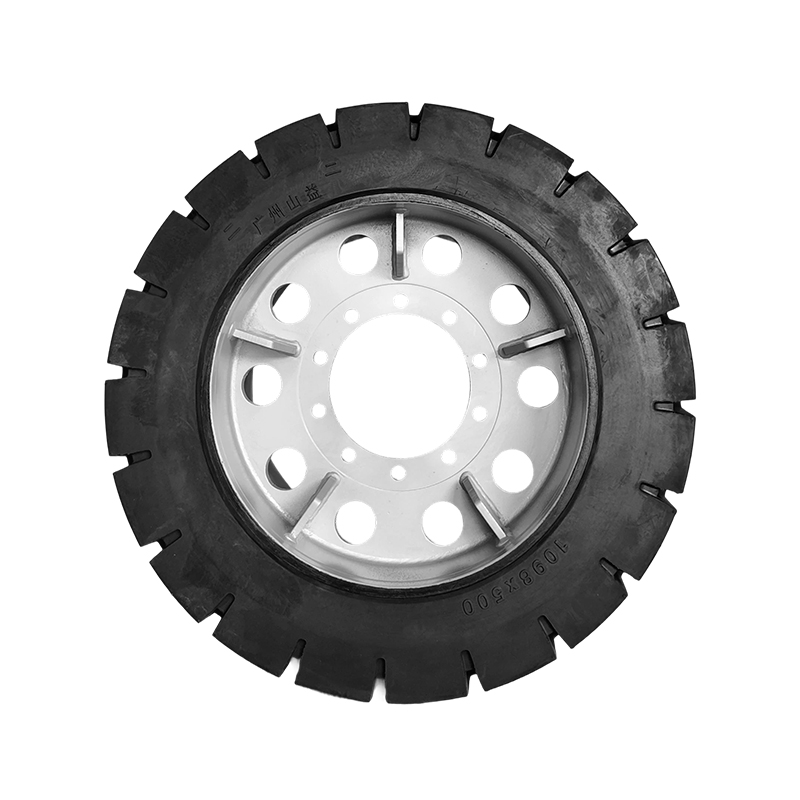
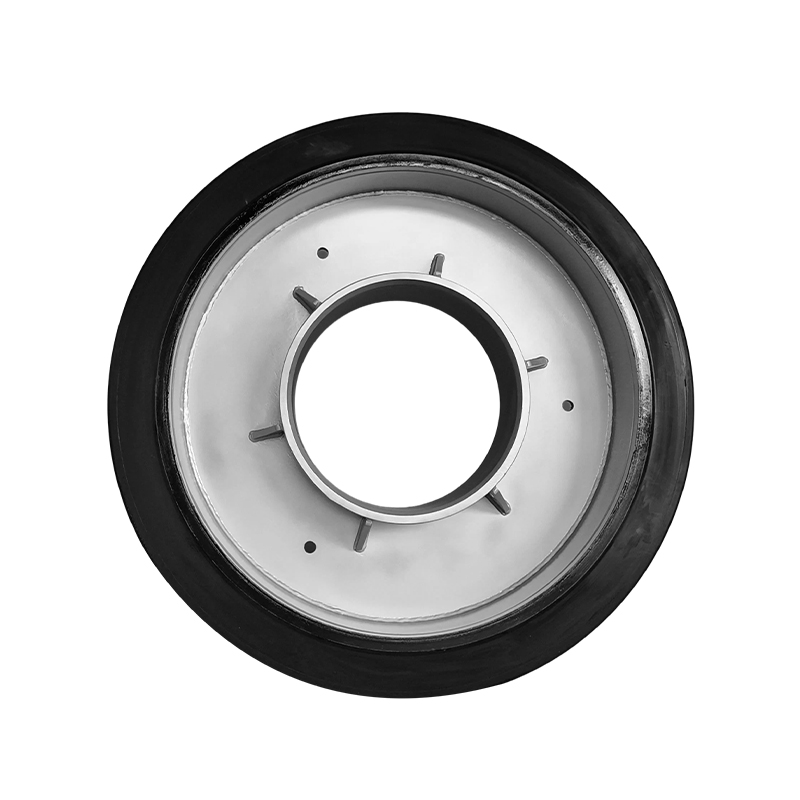
The core of bonded solid tires lies in their integrated construction—"cavity-free and air-pressure-free." The entire tire body is integrally molded from high-strength rubber through a precision vulcanization process, containing no internal air chambers and requiring no air pressure to support the load. This means that even if the tire surface is scratched by a sharp object or locally worn, it will not burst or collapse due to the instantaneous release of internal pressure. Without gas, there is no "explosion"; without the distinction between inner and outer tires, there is no risk of delamination. This completely solid design allows the tire to maintain its structural integrity and continue to bear load stably when faced with punctures, cuts, or even running over foreign objects, providing uninterrupted operational support for cranes.
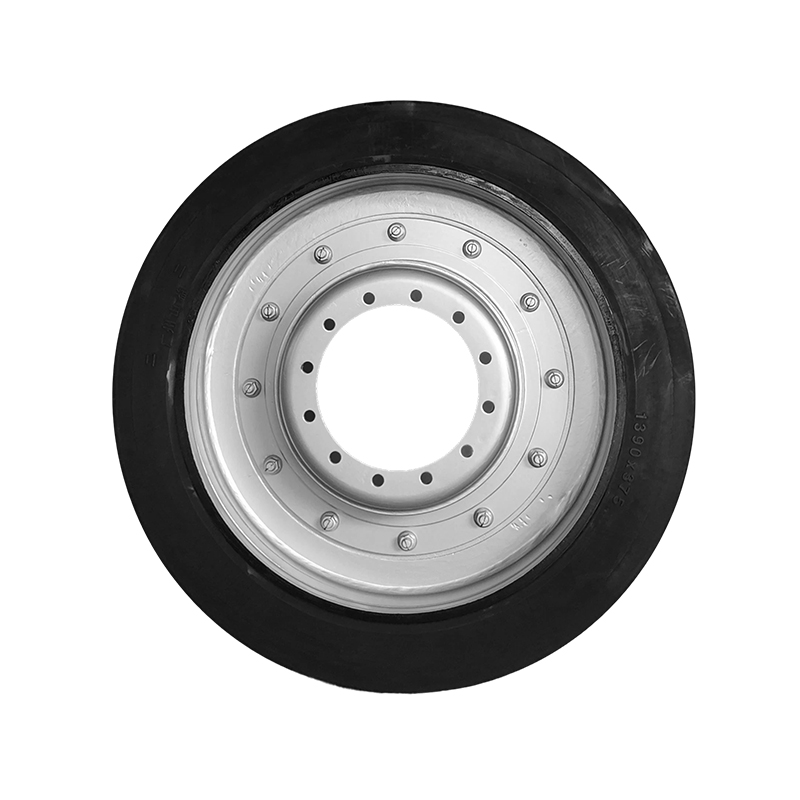
Furthermore, bonded solid tires eliminate potential hazards associated with the rim. Traditional pneumatic tires rely on rim lock rings or retaining rings to maintain sealing and positioning, but under high load and high vibration conditions, these metal components may loosen or even detach due to fatigue, becoming deadly projectiles in high-speed rotation. Solid tires, on the other hand, typically use direct bolt connections, firmly bonded to the rim without the need for complex locking mechanisms. The installation process is simplified to tightening bolts, reducing assembly error rates and completely avoiding secondary risks from rim component failure.
In addition, the rigid structure of solid tires gives them excellent resistance to deformation. During heavy lifting or sudden stops and turns, solid tires do not exhibit significant lateral bulging or abrupt changes in contact area like pneumatic tires, thus ensuring the stability of the crane chassis and improving handling precision and operational safety. This stability is particularly crucial on slopes, uneven surfaces, or slippery areas.
It's worth noting that this safety does not come at the expense of durability. On the contrary, the high-strength rubber compound and dense molecular structure give solid tires excellent wear resistance, oil resistance, and aging resistance. Even after long-term exposure to ultraviolet light, salt spray, diesel fuel, or hydraulic oil, their physical properties remain stable, resulting in a lifespan far exceeding that of traditional tires. This means that port equipment is not only safer but also reduces downtime and maintenance costs associated with frequent tire changes.
Ultimately, the "complete elimination" of the risk of tire blowouts by bonded solid tires does not rely on external protection or early warning systems, but rather on innovations in material properties and structural logic that eradicate safety hazards at the physical level. It replaces fragility with solidity, assembly with wholeness, and certainty with randomness. In the fast-paced and safety-first world of modern port operations, this "never-exploding tire" reliability is not only the cornerstone of efficient equipment operation, but also the most solid protection for every on-site worker. As the gantry crane smoothly moves between containers, the silently turning solid tires are the most reliable, unspoken promise of safety and efficiency.
The core of bonded solid tires lies in their integrated construction—"cavity-free and air-pressure-free." The entire tire body is integrally molded from high-strength rubber through a precision vulcanization process, containing no internal air chambers and requiring no air pressure to support the load. This means that even if the tire surface is scratched by a sharp object or locally worn, it will not burst or collapse due to the instantaneous release of internal pressure. Without gas, there is no "explosion"; without the distinction between inner and outer tires, there is no risk of delamination. This completely solid design allows the tire to maintain its structural integrity and continue to bear load stably when faced with punctures, cuts, or even running over foreign objects, providing uninterrupted operational support for cranes.
Furthermore, bonded solid tires eliminate potential hazards associated with the rim. Traditional pneumatic tires rely on rim lock rings or retaining rings to maintain sealing and positioning, but under high load and high vibration conditions, these metal components may loosen or even detach due to fatigue, becoming deadly projectiles in high-speed rotation. Solid tires, on the other hand, typically use direct bolt connections, firmly bonded to the rim without the need for complex locking mechanisms. The installation process is simplified to tightening bolts, reducing assembly error rates and completely avoiding secondary risks from rim component failure.
In addition, the rigid structure of solid tires gives them excellent resistance to deformation. During heavy lifting or sudden stops and turns, solid tires do not exhibit significant lateral bulging or abrupt changes in contact area like pneumatic tires, thus ensuring the stability of the crane chassis and improving handling precision and operational safety. This stability is particularly crucial on slopes, uneven surfaces, or slippery areas.
It's worth noting that this safety does not come at the expense of durability. On the contrary, the high-strength rubber compound and dense molecular structure give solid tires excellent wear resistance, oil resistance, and aging resistance. Even after long-term exposure to ultraviolet light, salt spray, diesel fuel, or hydraulic oil, their physical properties remain stable, resulting in a lifespan far exceeding that of traditional tires. This means that port equipment is not only safer but also reduces downtime and maintenance costs associated with frequent tire changes.
Ultimately, the "complete elimination" of the risk of tire blowouts by bonded solid tires does not rely on external protection or early warning systems, but rather on innovations in material properties and structural logic that eradicate safety hazards at the physical level. It replaces fragility with solidity, assembly with wholeness, and certainty with randomness. In the fast-paced and safety-first world of modern port operations, this "never-exploding tire" reliability is not only the cornerstone of efficient equipment operation, but also the most solid protection for every on-site worker. As the gantry crane smoothly moves between containers, the silently turning solid tires are the most reliable, unspoken promise of safety and efficiency.