


How to quickly detect and repair bonding failure in the bonded solid tires of a stacker crane?
Release Time : 2026-02-24
Bonding failure of bonded solid tires on stacker cranes is a common malfunction in warehousing equipment operation. Rapid detection and repair require a comprehensive analysis considering the structural characteristics of the bonded solid tires, bonding process requirements, and the stacker crane's operating environment. Bonding failure typically manifests as relative slippage, separation, or localized detachment between the bonded solid tires and the rim, potentially leading to unstable stacker crane operation, positioning errors, or even equipment shutdown, severely impacting warehousing efficiency. Therefore, establishing a systematic detection and repair process is crucial.
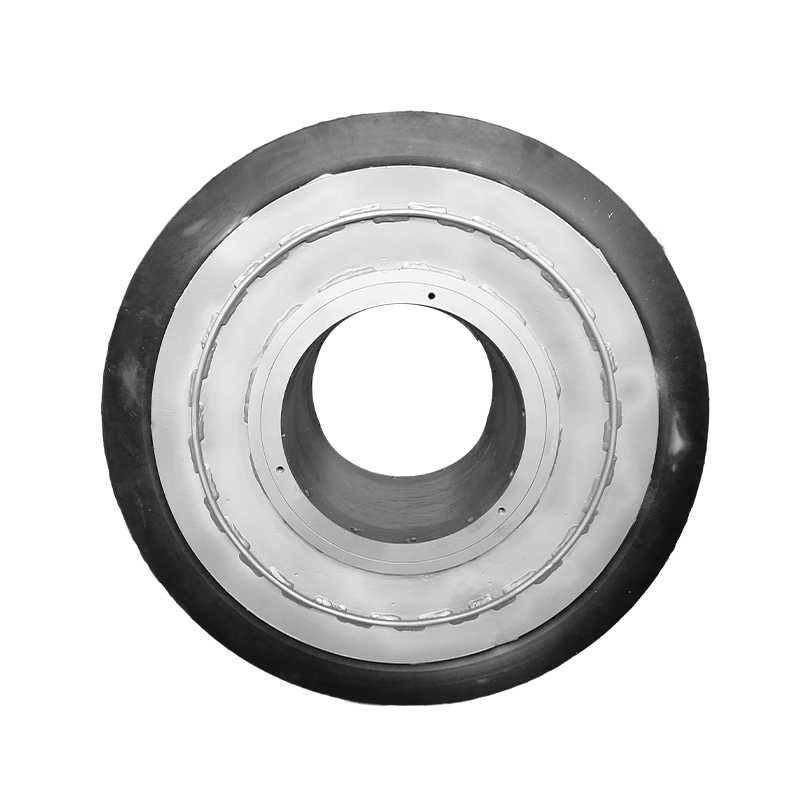
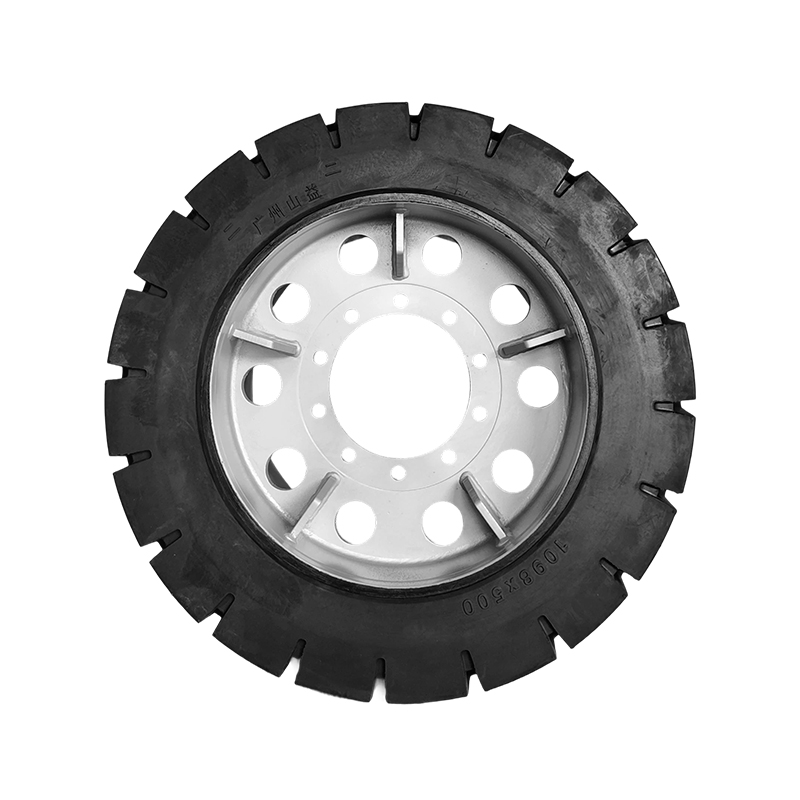
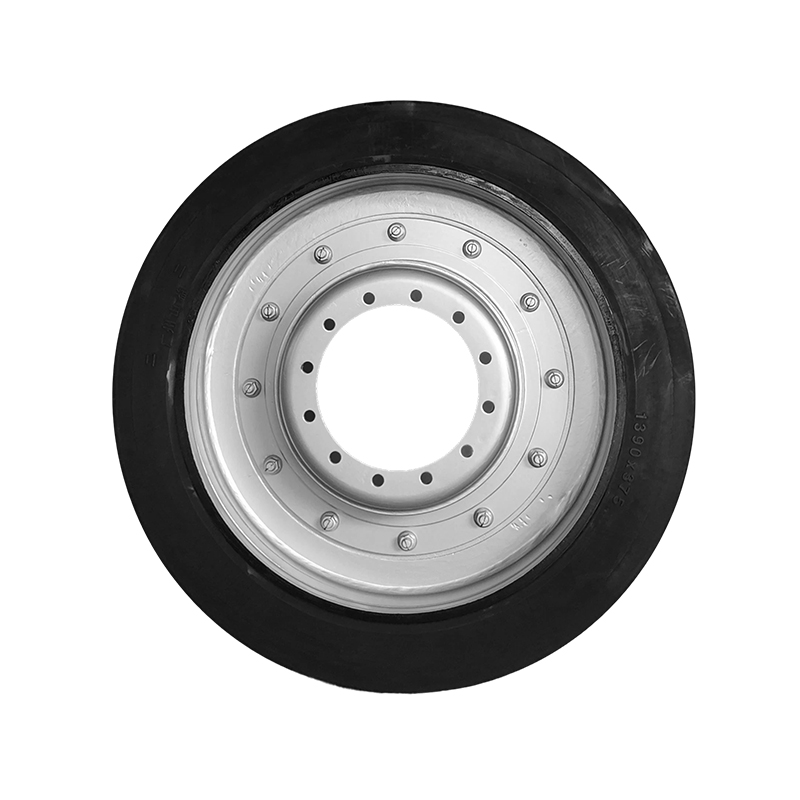
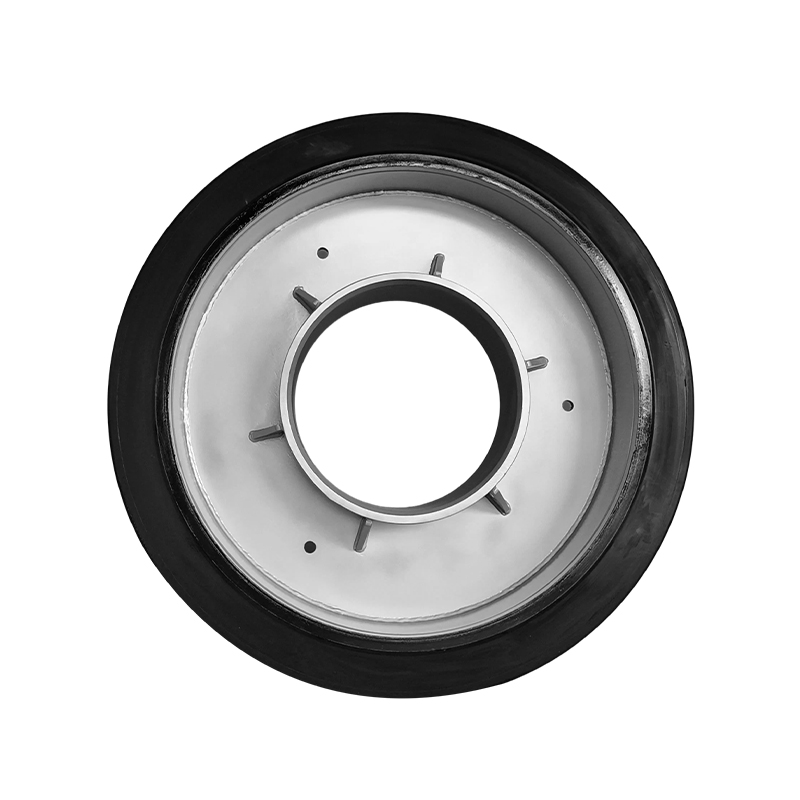
Rapid detection of bonding failure should focus on three aspects: appearance, sound, and operating status. First, visually inspect the contact surface between the bonded solid tires and the rim, observing for peeling adhesive, bubbles, or oil residue—direct signs of bonding failure. Second, when the stacker crane is running at low speed or the bonded solid tires are manually pushed, listen for abnormal friction sounds or a "clunking" sound, which may indicate gaps or misalignment between the bonded solid tires and the rim. Finally, by operating the stacker crane to move the bonded solid tires a short distance, observe whether they exhibit periodic jumping or directional shifts. Such phenomena are often related to uneven adhesion or localized failure.
If preliminary detection confirms adhesion failure, further pinpointing of the specific failure location is necessary. Specialized tools such as ultrasonic flaw detectors or infrared thermal imagers can be used to scan the bonding interface between the bonded solid tires and the rim. Ultrasonic flaw detection can identify voids or delamination within the adhesive layer through reflected waves, while infrared thermal imaging can detect localized temperature anomalies caused by frictional heat. Combining both methods can accurately locate the failure area. Furthermore, for adhesion failures suspected to be caused by oil or chemical contamination, samples from the contact surface should be collected for compositional analysis to identify the source of contamination and develop a targeted cleaning plan.
Repairing adhesion failure requires selecting an appropriate method based on the cause of the failure. If the failure is due to adhesive aging or insufficient strength, the old adhesive layer and residue must be thoroughly removed. Use sandpaper or a wire brush to polish the contact surfaces of the rim and bonded solid tires until the required roughness is achieved to enhance the adhesion of the new adhesive. After cleaning, select a specialized adhesive with properties matching the original adhesive layer and apply it evenly to the contact surface, controlling the adhesive layer thickness and curing time according to the instructions. For failures caused by contamination, the contact surface must be cleaned with solvent and ensured to be completely dry before bonding.
During the repair process, environmental conditions must be strictly controlled to ensure bonding quality. Temperature, humidity, and dust are key factors affecting bonding effectiveness. Generally, the ambient temperature should be between 15-35℃, relative humidity below 65%, and there should be no significant airflow or dust interference. If environmental conditions do not meet these requirements, measures such as heating, dehumidification, or constructing a dust-free environment should be taken to improve them. Furthermore, after applying the adhesive, pressure treatment should be applied as required. Special clamps or weights can be used to apply uniform pressure to the bonded solid tires and rim to promote full curing of the adhesive layer.
After repair, functional verification is necessary to ensure the repair effect. First, visually and tactilely inspect the bonding interface for smoothness, absence of bubbles or gaps. Second, conduct a low-speed test run within a safe area to observe whether the bonded solid tires are stable and free from abnormal vibration or noise. Finally, a positioning test of the stacker crane is conducted to confirm that the repaired bonded solid tires do not affect the positioning accuracy and operational stability of the equipment. If any abnormalities occur during the trial run, the machine must be stopped immediately for inspection and repair.
To prevent the recurrence of adhesive failure, daily maintenance and management of the stacker crane's bonded solid tires must be strengthened. Regularly check the air pressure, wear, and adhesion status of the bonded solid tires to promptly identify and address potential problems. Avoid prolonged exposure of the bonded solid tires to high temperatures, humidity, or chemically corrosive environments to extend the service life of the adhesive layer. Furthermore, when replacing bonded solid tires or performing bonding operations, operating procedures must be strictly followed to ensure that each step meets technical requirements.
The detection and repair of adhesive failure in stacker crane bonded solid tires requires a combination of professional tools, standardized operations, and strict environmental control. A systematic testing process is used to pinpoint the cause of the failure, employing targeted repair methods to restore adhesive performance, and functional verification is conducted to ensure the repair effect. Simultaneously, strengthened daily maintenance and management can effectively prevent the recurrence of failures, ensuring the stable operation of the stacker crane and the efficient conduct of warehousing operations.