


How are bonded solid tires reshaping the safety and efficiency of industrial logistics?
Release Time : 2026-06-25
In the grand landscape of modern industrial logistics and heavy equipment, the vehicle's mobility system is undoubtedly the core cornerstone for ensuring production continuity and operational safety. With the widespread application of automated and intelligent equipment in warehousing, mining, and manufacturing, the limitations of traditional pneumatic tires—such as susceptibility to damage under extreme conditions and the need for frequent maintenance—are becoming increasingly apparent. Against this backdrop, bonded solid tires, with their superior physical properties and extremely high reliability, have become the preferred mobility solution for stacker cranes, heavy-duty forklifts, IGVs (Intelligent Guided Vehicles), AGVs (Automated Guided Vehicles), ART (Automated Rail Transport Systems), and other flatbed transport equipment and mining equipment, profoundly reshaping the operational efficiency and safety standards of modern industry.
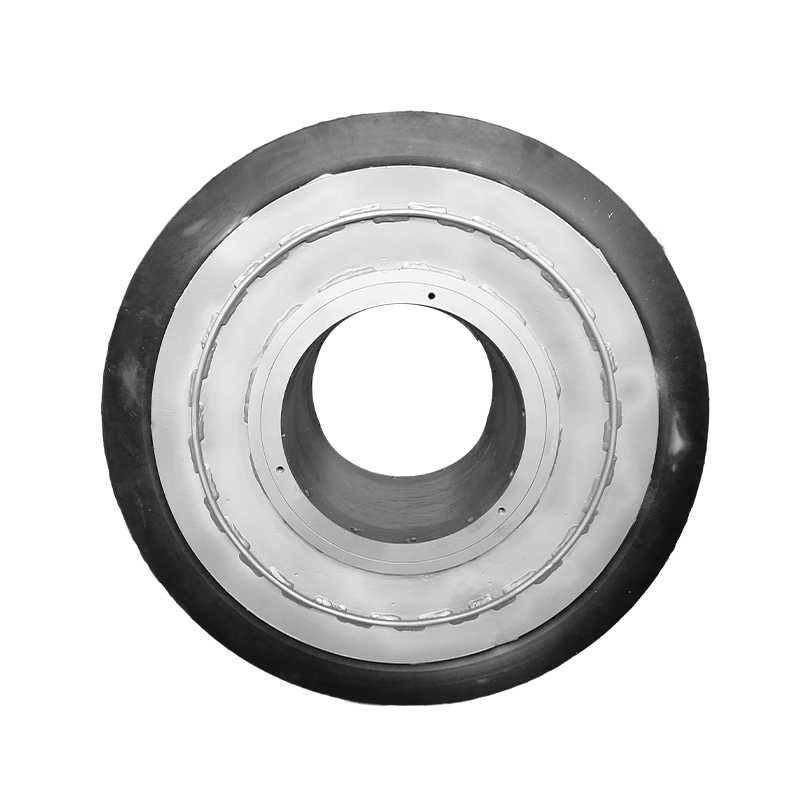
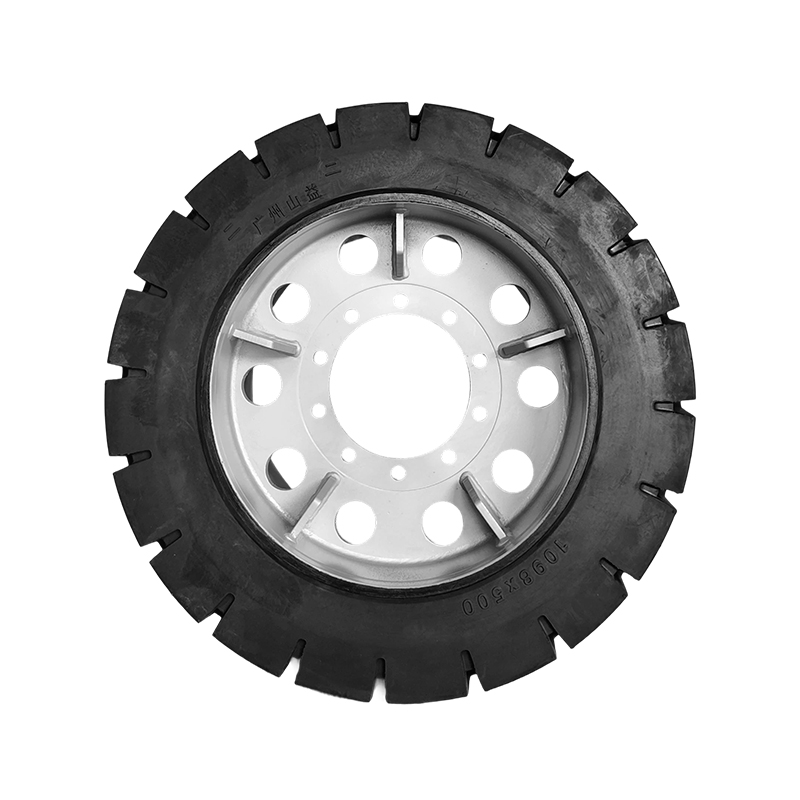
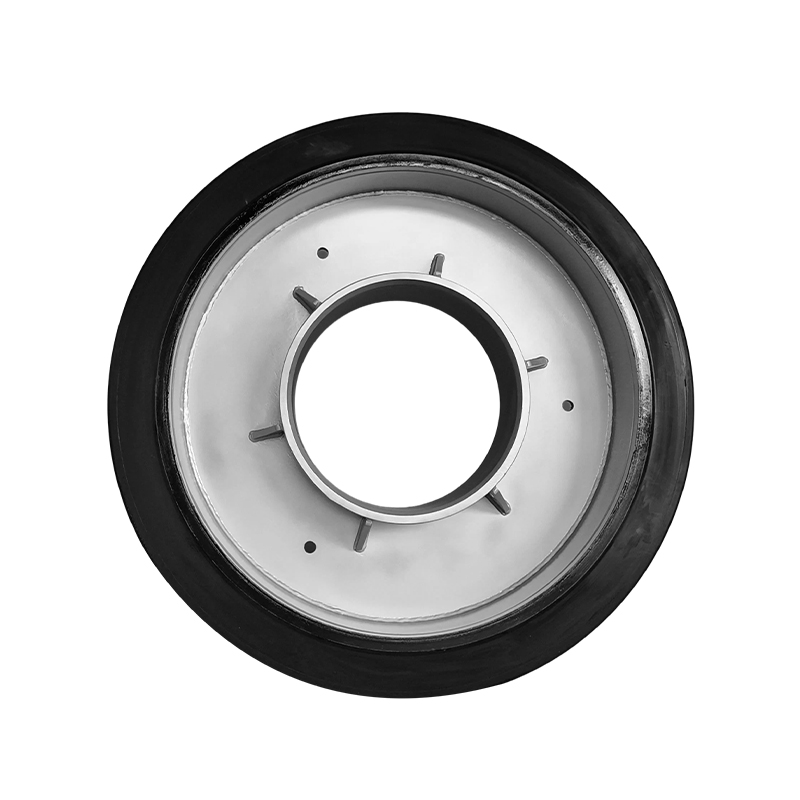
The core advantages of bonded solid tires stem primarily from their unique manufacturing process and robust structural design. The entire tire carcass is made of high-strength rubber, and an advanced bonding process tightly bonds the carcass to the rim. Unlike traditional tires, it completely eliminates internal fillers and the inflation process, fundamentally eliminating the risk of tire blowouts caused by unstable air pressure or external punctures. In harsh environments filled with sharp gravel and metal scrap, such as mining operations, port loading and unloading, and construction sites, bonded solid tires demonstrate exceptional puncture and cut resistance. Simultaneously, thanks to their high-strength bonding technology, they completely eliminate serious safety hazards such as rim retainer detachment, providing unparalleled safety assurance for the stability of heavy equipment during high-speed operation or high-load work.
Beyond their superior safety, bonded solid tires also excel in load-bearing capacity and lifespan. Their solid, all-rubber structure gives the tires extremely high rigidity and load-bearing capacity, easily handling the immense pressure generated by heavy forklifts or large transport equipment during frequent handling of heavy objects. Under the same usage conditions, their lifespan can be several times longer than that of traditional tires. This extended lifespan not only significantly reduces the frequency of tire replacements but also substantially reduces production interruptions caused by equipment downtime for tire changes, thereby effectively improving overall equipment utilization and production efficiency. For modern enterprises seeking cost reduction and efficiency improvement, bonded solid tires are undoubtedly a high-quality asset capable of generating higher profits.
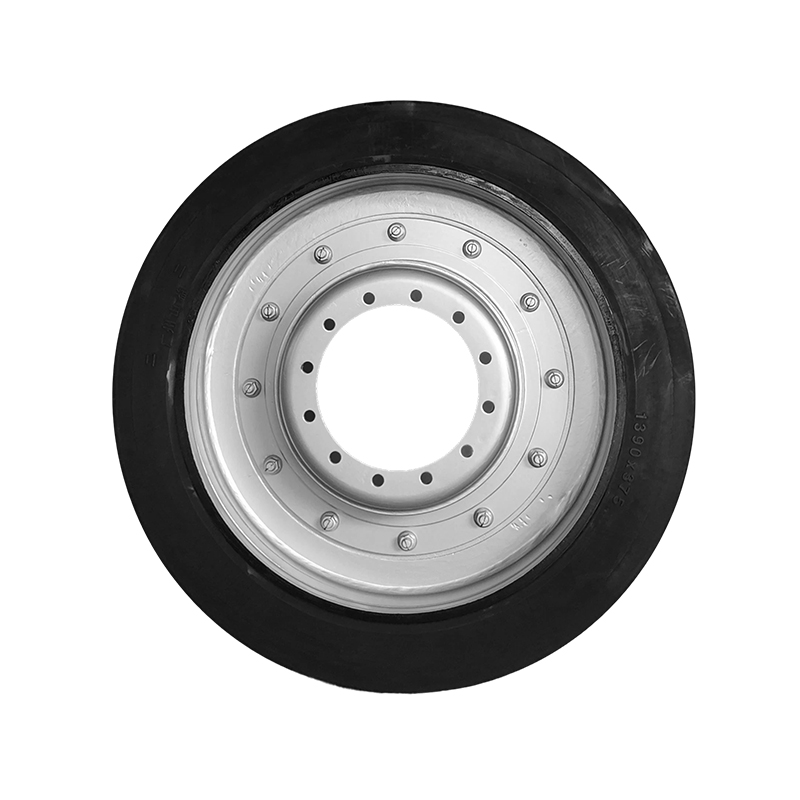
In terms of maintenance costs and ease of installation, bonded solid tires demonstrate exceptional industrial friendliness. Since they require no inflation, businesses are freed from the tedious routine of checking tire pressure and patching, significantly reducing long-term maintenance costs in terms of manpower and resources. During installation, their design fully considers the practical needs of industrial sites, requiring only simple bolt tightening for fixation, without the need for complex specialized disassembly and assembly equipment. This simple and quick installation method not only shortens equipment maintenance cycles but also greatly facilitates the rapid deployment and efficient operation of automated unmanned handling equipment such as IGVs and AGVs.
In short, the widespread application of bonded solid tires vividly reflects the transformation of modern industrial equipment towards higher safety, higher durability, and lower maintenance costs. It not only provides stacker cranes, heavy-duty forklifts, and various automated transportation equipment with a pair of robust and durable "steel feet," but also promotes cost reduction and efficiency improvement across the entire logistics and heavy industry sector at a micro-level. With continuous breakthroughs in materials science and bonding technology, bonded solid tires will undoubtedly continue to support the safety and prosperity of modern industrial systems with their robust and efficient performance in the construction of smart factories and green mines in the future.
The core advantages of bonded solid tires stem primarily from their unique manufacturing process and robust structural design. The entire tire carcass is made of high-strength rubber, and an advanced bonding process tightly bonds the carcass to the rim. Unlike traditional tires, it completely eliminates internal fillers and the inflation process, fundamentally eliminating the risk of tire blowouts caused by unstable air pressure or external punctures. In harsh environments filled with sharp gravel and metal scrap, such as mining operations, port loading and unloading, and construction sites, bonded solid tires demonstrate exceptional puncture and cut resistance. Simultaneously, thanks to their high-strength bonding technology, they completely eliminate serious safety hazards such as rim retainer detachment, providing unparalleled safety assurance for the stability of heavy equipment during high-speed operation or high-load work.
Beyond their superior safety, bonded solid tires also excel in load-bearing capacity and lifespan. Their solid, all-rubber structure gives the tires extremely high rigidity and load-bearing capacity, easily handling the immense pressure generated by heavy forklifts or large transport equipment during frequent handling of heavy objects. Under the same usage conditions, their lifespan can be several times longer than that of traditional tires. This extended lifespan not only significantly reduces the frequency of tire replacements but also substantially reduces production interruptions caused by equipment downtime for tire changes, thereby effectively improving overall equipment utilization and production efficiency. For modern enterprises seeking cost reduction and efficiency improvement, bonded solid tires are undoubtedly a high-quality asset capable of generating higher profits.
In terms of maintenance costs and ease of installation, bonded solid tires demonstrate exceptional industrial friendliness. Since they require no inflation, businesses are freed from the tedious routine of checking tire pressure and patching, significantly reducing long-term maintenance costs in terms of manpower and resources. During installation, their design fully considers the practical needs of industrial sites, requiring only simple bolt tightening for fixation, without the need for complex specialized disassembly and assembly equipment. This simple and quick installation method not only shortens equipment maintenance cycles but also greatly facilitates the rapid deployment and efficient operation of automated unmanned handling equipment such as IGVs and AGVs.
In short, the widespread application of bonded solid tires vividly reflects the transformation of modern industrial equipment towards higher safety, higher durability, and lower maintenance costs. It not only provides stacker cranes, heavy-duty forklifts, and various automated transportation equipment with a pair of robust and durable "steel feet," but also promotes cost reduction and efficiency improvement across the entire logistics and heavy industry sector at a micro-level. With continuous breakthroughs in materials science and bonding technology, bonded solid tires will undoubtedly continue to support the safety and prosperity of modern industrial systems with their robust and efficient performance in the construction of smart factories and green mines in the future.